📋
Manual quoting & proposals
Sales teams lose days generating bespoke quotes. Without a configured CPQ tool, margins slip and customer experience suffers.

Solar Industry · UK & Global
ORA designs and engineers bespoke digital products for solar installers, EPC contractors, and energy retailers from London to the world.
7+
Years delivering digital products
200+
Clients across UK & globe
350+
Projects completed
Industry Challenges
From UK MCS compliant documentation to global fleet management the industry needs software that speaks its language.
Sales teams lose days generating bespoke quotes. Without a configured CPQ tool, margins slip and customer experience suffers.
Dispatching engineers without real time tracking or job updates leads to missed SLAs and costly revisits especially across UK regions.
Performance data, warranty claims, and customer records scattered across Excel and email threads impossible to act on or audit.
CRM, monitoring platforms, invoicing tools, and customer portals don't talk to each other your team bridges the gap manually, every day.
Homeowners and commercial clients expect live production dashboards, digital onboarding, and instant support not PDF reports by email.
MCS, DNO applications, ECO4, BUS scheme documentation UK solar compliance is a moving target that generic software simply doesn't handle.
What We Build
Solar CRM Pipeline Overview
Creative Case Scenarios
Real world scenarios from the solar industry and how intelligent software engineering turns operational pain into competitive advantage.
The challenge
A South London solar company was completing 30 installs per month but spending 3 full days per week on MCS compliance documentation, DNO application forms, and warranty certificate generation all done manually. They could not scale beyond 40 jobs without hiring two extra admin staff.
ORA's approach:
We built a compliance automation engine fed by the engineer's mobile app that auto populated MCS certificates, generated DNO G98/G99 applications, and sent branded handover packs to customers on install completion. No admin team needed.
Impact
The challenge
A commercial solar EPC with 200 active roof mounted systems across retail parks, warehouses, and schools was monitoring performance via monthly CSV exports from inverter manufacturers. Faults were spotted weeks late. Clients were unhappy. Their O&M contract renewals were at risk.
ORA's approach:
We integrated SolarEdge, Fronius, and Huawei APIs into a unified asset monitoring dashboard. Real time fault alerting via SMS/email, automated performance reports to clients, and scheduled maintenance workflows all on one platform.
Impact
The challenge
A UK solar and battery retailer was winning great NPS scores at handover, then losing customers to competitor O&M providers 18 months later simply because they had no ongoing digital touchpoint. No app, no portal, no visibility for customers after the inverter was switched on.
ORA's approach:
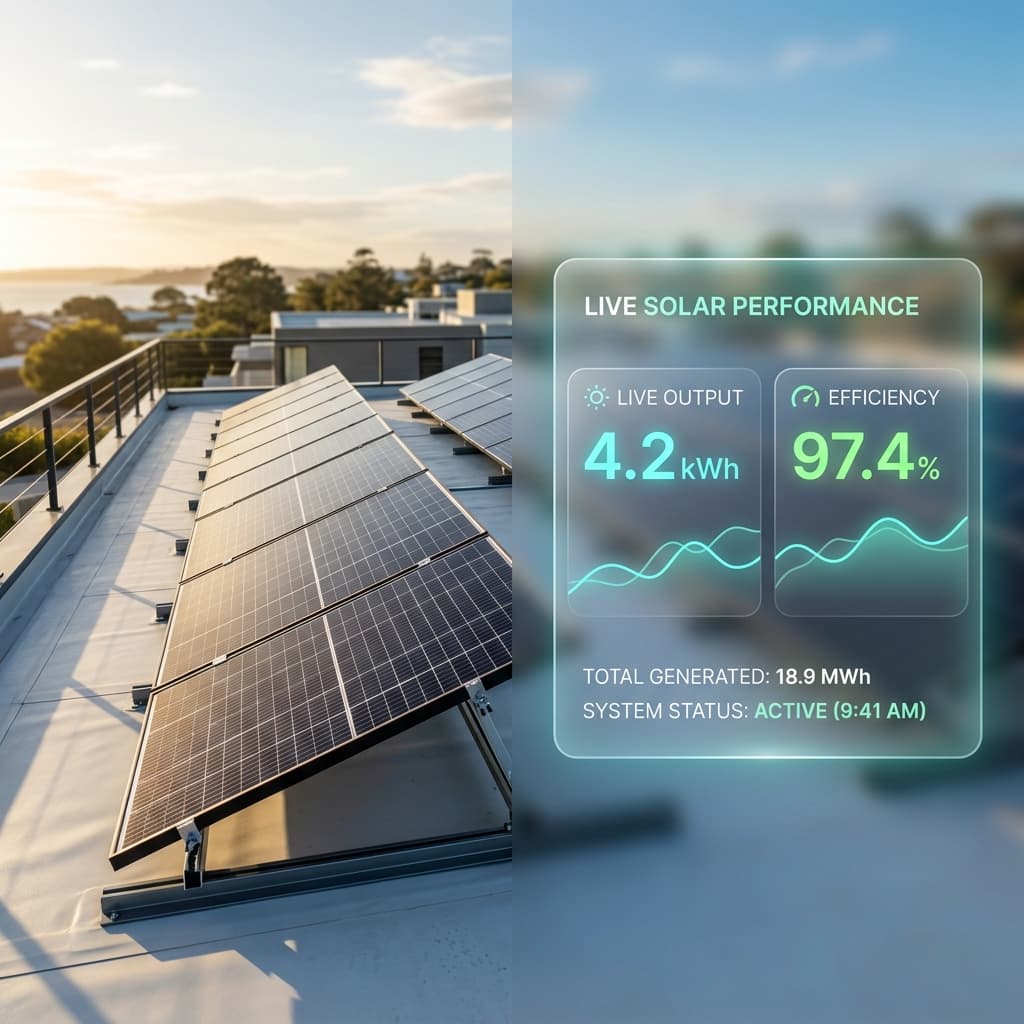
We built a branded customer energy portal web and iOS showing live solar output, battery charge levels, export earnings, CO₂ saved, and appliance scheduling tips. Push notifications when energy savings hit milestones. Support tickets in app.
Impact
The challenge
A renewable energy developer rolling out utility scale solar farms across the UK, Middle East, and Southeast Asia had no central system to manage subcontractor onboarding, ISO certification tracking, inspection sign offs, and milestone based payments all handled via WhatsApp and email chains.
ORA's approach:
A multi tenant subcontractor management portal with role based access, certification expiry alerts, digital inspection checklists, GPS verified site attendance, and payment milestone triggers linked to completion evidence all audit ready for Tier 1 clients.
Impact
The challenge
A West Midlands installer was approved for the UK Government's Boiler Upgrade Scheme (BUS) and ECO4 programme. The opportunity was enormous but the data submission requirements, means testing workflows, and Ofgem reporting formats were completely incompatible with their existing job management system.
ORA's approach:
We developed a scheme compliant intake module: eligibility screening, automated means testing data collection, Ofgem XML export generation, and audit trail creation all embedded in their existing job flow with no workflow disruption for field teams.
Impact
The challenge
A national solar brand was spending £180 per residential survey before a single panel was sold. With 3,000 enquiries a month, qualified surveyors were the bottleneck and Google Maps based pre qualification was unreliable and time consuming for sales coordinators.
ORA's approach:
We built an AI assisted roof analysis tool customers upload phone photos or grant postcode access; the model estimates roof area, pitch, shading, orientation, and system suitability. Only qualified leads trigger a paid surveyor visit.
Impact
UK & Global Reach
Our London team works directly with UK solar companies, understanding MCS, DNO, Ofgem, and scheme specific requirements firsthand.
We build software that maps to current UK government solar incentive schemes so your systems are compliant from day one, not retrofitted.
With teams across the UK and USA, we've shipped solar software used in Europe, the Middle East, Australia, and Southeast Asia.
Every product we build for UK solar companies is architected with UK GDPR, ISO 27001 principles, and customer data sovereignty in mind.
16.7 GW
Total UK installed solar capacity and growing 20% year on year.
1.4M+
UK homes now generating their own solar power. Your customers need digital tools to match.
Market Tailwinds
Solar Technology
Perovskite is one of the most promising innovations in renewable energy using advanced crystalline materials that absorb sunlight more efficiently while being lighter, thinner, and potentially less expensive to manufacture than traditional silicon panels.
Perovskite cells have achieved efficiencies comparable to conventional silicon and continue to improve rapidly as the technology matures.
When combined with silicon in a tandem structure, perovskite can exceed the efficiency limits of standalone panels with research indicating efficiencies above 40% may be achievable.
Thin film production processes require less material and energy than conventional silicon manufacturing, helping drive down panel costs.
The thin film nature of perovskite opens opportunities for flexible panels, building integrated photovoltaics (BIPV), and next generation energy solutions.
The solar industry is increasingly focused on tandem panels that layer a perovskite cell on top of silicon, capturing a broader range of the solar spectrum and converting more sunlight than standard silicon panels alone. Several manufacturers and research organisations are actively working toward large scale commercialisation.
How We Work
Our solar delivery process keeps compliance, integrations, and launch milestones on track from first workshop to live operations.
Technology
We choose technology to fit your product not the other way around. Here's what we commonly use in solar platforms.
Production stack
Tools & platforms we work with
Protocols · cloud · mobile · integrations
4 technologies
4 technologies
5 technologies
4 technologies
5 technologies
4 technologies
Need a stack audit or integration plan? We map your tools to a shippable architecture.
Talk to our engineering teamFrequently asked questions
Yes our UK team has direct experience working with solar companies navigating MCS certification workflows, G98/G99 DNO applications, and Ofgem scheme reporting (ECO4, BUS). We don't just build generic software; we build around your real compliance requirements from the start.
Related Industries
GET STARTED